
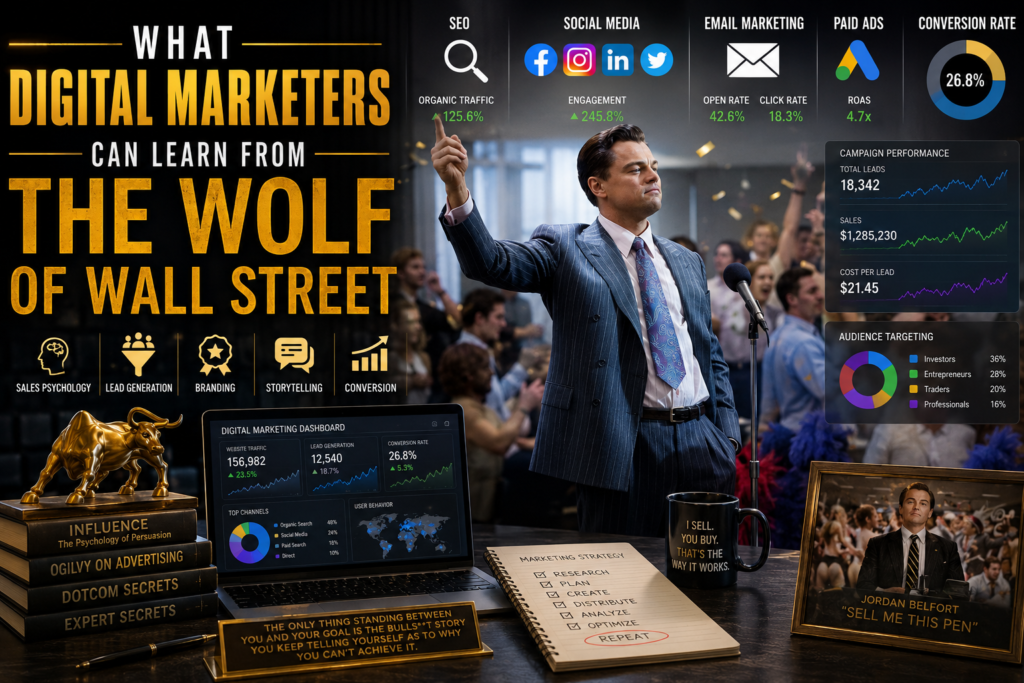
Love it or hate it, The Wolf of Wall Street is one of the most fascinating movies ever made about selling, influence, and ambition. While the film is packed with excess, chaos, and questionable decisions, it also offers surprisingly relevant lessons for today’s digital marketers.
No, this isn’t about copying Jordan Belfort’s tactics.
It’s about understanding why his approach worked so well on people—and how ethical marketers can use those same psychological principles to build stronger brands, create better content, and drive more conversions.
At its core, digital marketing is about understanding human behavior. And that’s exactly what the movie puts on display.
The Best Marketers Don’t Sell Products—They Sell Outcomes
One of the most quoted scenes in the film is the famous “Sell me this pen” challenge.
The reason the scene became legendary isn’t because it teaches people how to sell a pen. It highlights something far more important: customers don’t buy products because of features. They buy because they believe those products will solve a problem or improve their lives.
The same principle applies to SEO Marketing and Content Marketing.
People don’t search for software, courses, or services because they want another product. They search because they’re trying to achieve a goal, solve a challenge, or avoid a problem.
The marketers who win are the ones who understand search intent and create content that directly addresses what their audience is looking for.
Personal Branding Is a Competitive Advantage
Jordan Belfort didn’t just build a company. He built a persona.
People were drawn to his confidence, energy, and ability to command attention. While modern marketers should avoid the arrogance, there’s a valuable lesson here about Personal Branding.
In today’s digital world, trust often starts with visibility.
Whether you’re a freelancer, agency owner, consultant, or in-house marketer, people are more likely to engage with someone they recognize and trust. That’s why thought leadership content, LinkedIn posts, podcasts, webinars, and personal stories have become such powerful marketing tools.
People connect with people before they connect with brands.
Storytelling Is Still the Most Powerful Marketing Tool
If you’ve watched the movie, you’ll notice that Belfort constantly tells stories.
He doesn’t rely on facts alone. He creates excitement, paints a vision, and makes people feel like they’re part of something bigger.
That’s exactly why storytelling remains at the heart of effective Content Marketing.
The best blog posts, videos, emails, and social media campaigns aren’t just informational. They’re engaging. They create emotional connections and make ideas easier to remember.
Customers may forget statistics, but they’ll remember a story that made them feel something.
Lead Generation Starts with Knowing Your Audience
One reason Belfort’s team was so effective was their ability to identify and focus on the right prospects.
Modern Lead Generation works the same way.
A successful marketing campaign isn’t about reaching everyone. It’s about reaching the people most likely to care.
That’s why audience research matters so much. Keyword analysis, buyer personas, customer interviews, and behavioral data help marketers create more relevant messages.
The better you understand your audience, the easier it becomes to attract qualified traffic and generate meaningful leads.
Attention Means Nothing Without Conversion
The movie repeatedly emphasizes one thing: closing.
In digital marketing terms, that’s Conversion Optimization.
Getting website visitors, social media engagement, or email opens is great, but none of those metrics matter if they don’t lead to action.
This is where landing page design, persuasive copywriting, social proof, and strong calls-to-action become essential.
The goal isn’t simply to attract attention. The goal is to turn interest into measurable results.
Small improvements in conversion rates can often have a bigger impact than large increases in traffic.
The Real Lesson: Influence Comes with Responsibility
Perhaps the biggest takeaway from The Wolf of Wall Street isn’t about selling at all.
It’s about the responsibility that comes with influence.
The movie shows what happens when persuasion is used without ethics. For digital marketers, that serves as an important reminder. Trust is one of the most valuable assets a brand can build, and once it’s lost, it’s difficult to regain.
The most successful Digital Marketing Strategies combine persuasion with transparency, value, and authenticity.
That’s how sustainable growth is created.
Conclusion
The Wolf of Wall Street may not be a marketing textbook, but it offers a fascinating look into human psychology, persuasion, and communication.
From Sales Psychology and Personal Branding to Lead Generation, Content Marketing, SEO Marketing, and Conversion Optimization, the film highlights principles that remain highly relevant in today’s digital landscape.
The difference is that modern marketers have the opportunity to apply these lessons ethically—using influence not to manipulate people, but to create value, build trust, and grow lasting relationships with their audience.